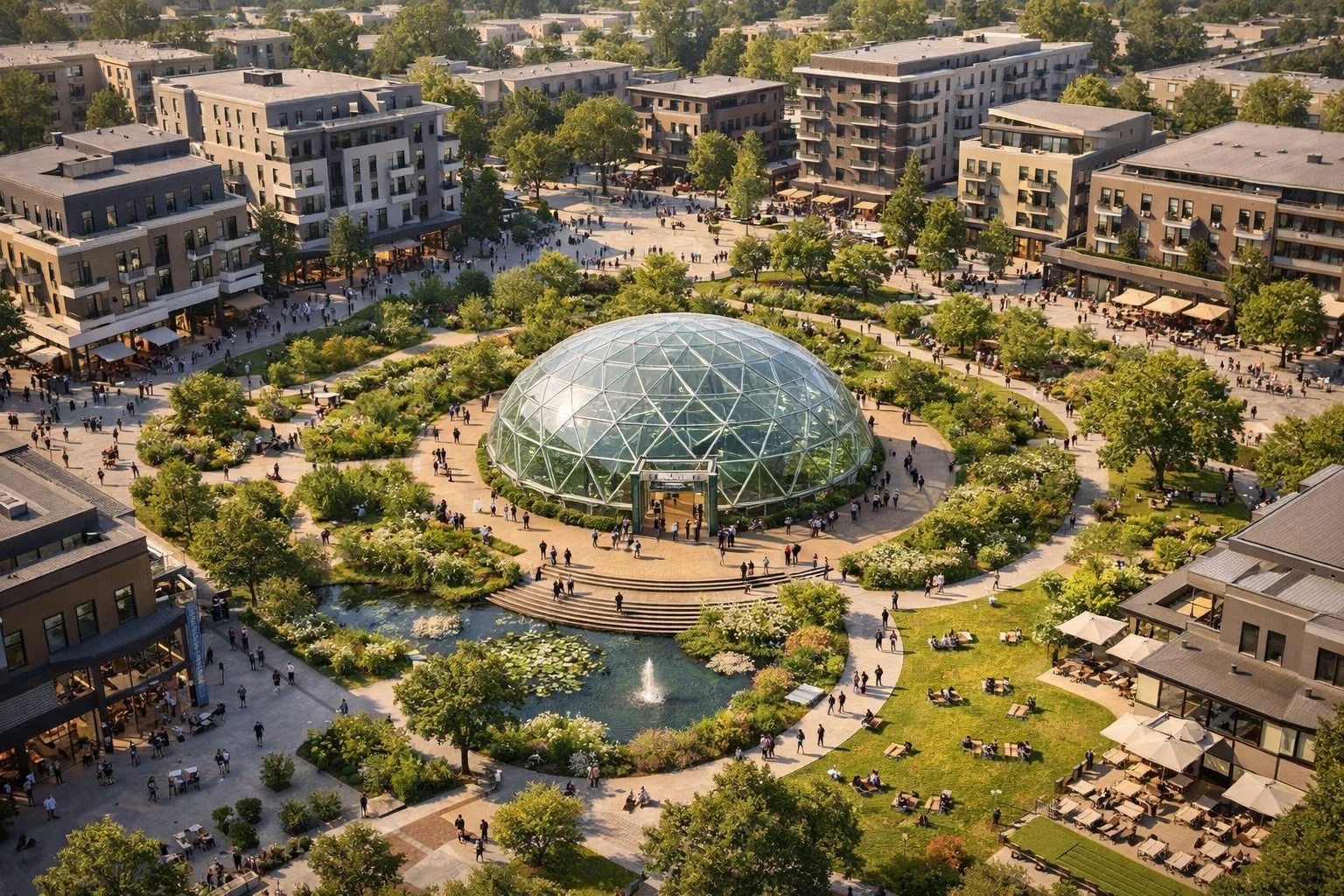
Oasis Charlotte is not a wellness amenity. It's an economic development project with measurable returns in employment, tax revenue, corridor stabilization, community health, and recreation access.
See the full analysisConstruction activity, permanent employment, regional tourism, recreation and green space value, and long-term community benefit.
This analysis applies IMPLAN input-output multipliers calibrated for Mecklenburg County. Employment multipliers follow the RIMS II framework (Bureau of Economic Analysis). Social Return on Investment methodology follows the Cabinet Office (UK) framework, adapted for U.S. municipal applications as used by Econsult Corporation. Recreation and park value follows Trust for Public Land and NRPA frameworks. Regional tourism impact follows the U.S. Travel Association Economic Impact methodology.
Every figure below is sourced. Figures marked with a checkmark are derived from established multiplier tables or comparable project data; figures marked with an arrow are model assumptions flagged for independent review.
An $8.5M–$10M direct injection into the Mecklenburg County economy over an 18-month build.
Midpoint basis for all multipliers
2027–2028, estimated
Mecklenburg County residents
Total output per $1 of construction spend
| Job Category | Direct | Indirect | Induced | Total |
|---|---|---|---|---|
| Construction workers | 86 | — | — | 86 |
| Supply chain — materials & services | — | 38 | — | 38 |
| Induced — worker household spending | — | — | 40 | 40 |
| Total Construction Jobs | 86 | 38 | 40 | 164 |
Total construction wage impact (direct + indirect + induced, plus $516,000 in architectural professional services): $9,360,000. Total construction output at the 2.14x multiplier: $18,190,000. One-time construction permit fees: $85,000.
The operational model ramps from 6 FTEs at opening to 10 FTEs at stabilization, with intentional hiring priority from Brookhill and surrounding communities.
Tea guides, coordinators, operations, hospitality
Full complement at 650 members
10 direct + 8 supply chain + 10 induced
Direct revenue + multiplier impact
Beyond direct operations, member and destination-visitor spending in the Brookhill corridor generates meaningful additional economic activity.
650 members × $25/visit × 6 visits/month
Event and wellness-tourism visitors from outside Charlotte
Local + regional combined
Municipal and county tax revenue generated at stabilized operations, across multiple streams.
| Revenue Stream | Annual Value |
|---|---|
| Property tax (improved value) | $42,000 |
| Sales tax on retail & events | $28,600 |
| Sales tax on tea lounge / food | $12,100 |
| Income tax on employee wages | $27,500 |
| FICA / payroll tax (federal) | $42,075 |
| Hotel / occupancy tax (event visitors) | $11,200 |
| Total Annual Tax Revenue | $163,475 |
10-year cumulative fiscal contribution: $1.63M+ — excluding property value appreciation and sales tax growth.
Each value is drawn from published peer-reviewed literature or established government cost benchmarks, following the Cabinet Office (UK) SROI framework as applied by Econsult Corporation.
| Social Outcome | Population | Annual Value |
|---|---|---|
| Reduced anxiety & depression symptoms | 500 members | $1,200,000 |
| Community mental health — CBI program | 500 attendees/yr | $900,000 |
| Healthcare worker burnout prevention | 80 Healer's members | $896,000 |
| Brookhill corridor stabilization | 200 existing residents | $840,000 |
| Reduction in social isolation | 650 members | $780,000 |
| Chronic stress reduction — cardiovascular risk | 500 members | $445,000 |
| Recreation & public green space value | ~8,000 annual visitors | $440,000 |
| Subsidized access — reserved community seats | 120 community members | $345,600 |
| Wellness tourism — regional health outcome value | ~800 visitors/yr | $232,000 |
| Urban heat island mitigation — botanical dome | City / corridor | $80,000 |
| Total Annual SROI | $6,158,600 |
The exterior grounds — meditation garden, walking labyrinth, herb garden, and outdoor gathering lawn — function as accessible public green space in a corridor with limited recreational infrastructure.
Charlotte's park access is below average for a city of its size, particularly in historically underinvested corridors including Brookhill. The weekly Sunday Service is free and open to all; the herb garden and fruit-bearing trees are shared with Brookhill residents. This is programmatic green space, not incidental landscaping — valued at $440,000 annually across an estimated 8,000 recreational users per year.
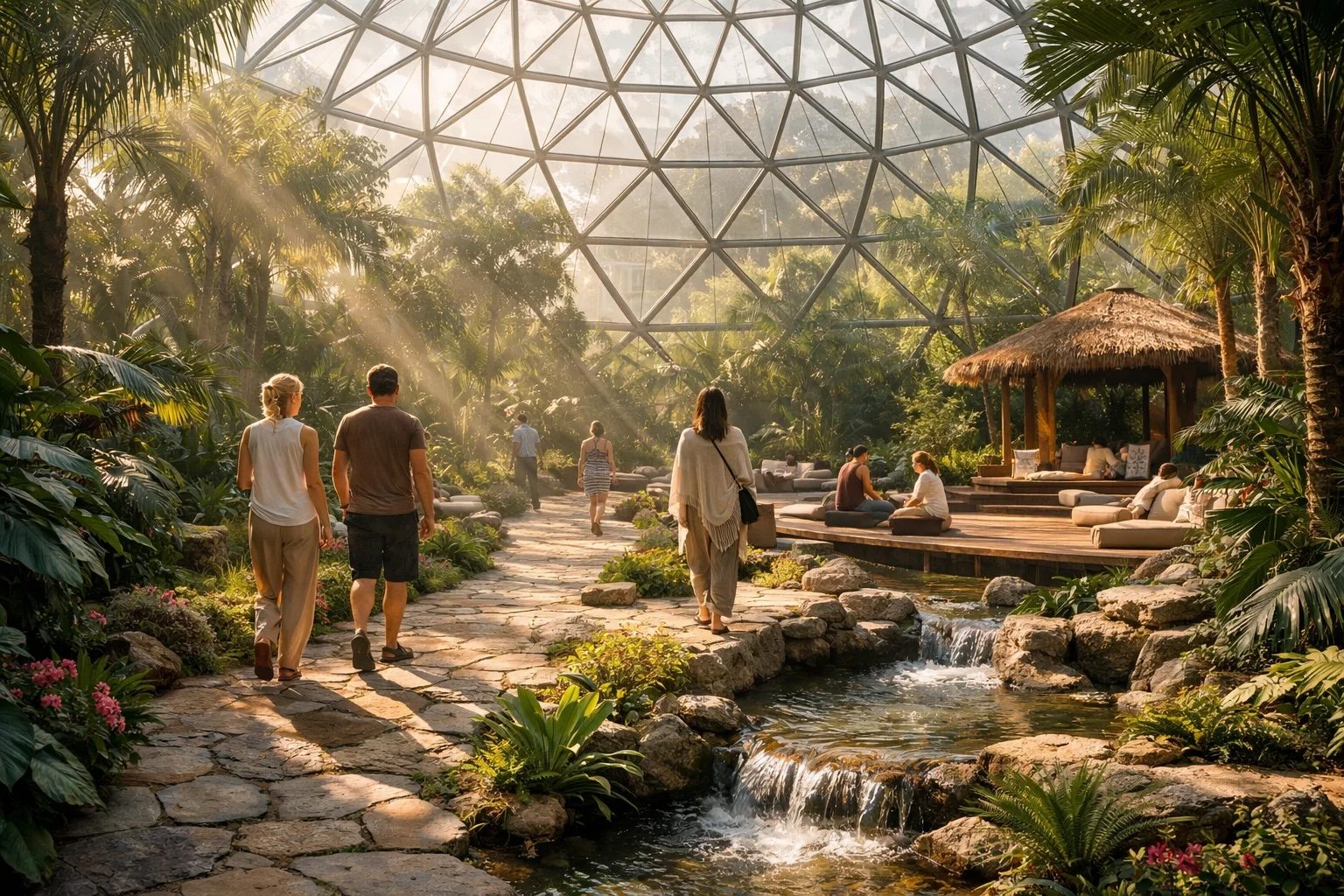
Oasis has the potential to anchor a designated wellness district in the Brookhill / South End corridor — a designation that unlocks federal funding streams and aligns with Charlotte's existing strategic priorities.
Federal CDBG funding streams directed at health infrastructure in underserved communities
CDC Healthy Community Design Initiative grant eligibility
FHWA Active Transportation and Safety Program funding for pedestrian and trail infrastructure
Tourism designation through NC Commerce and the Charlotte Regional Visitors Authority
Comparable districts — Nashville's Wellbeing District, Atlanta's BeltLine Wellness District, Denver's Healing Garden District, and Pittsburgh's Innovation Health District — each demonstrate that wellness infrastructure qualifies as an economic development anchor eligible for federal co-investment.
Placemaking assets generate value beyond their own operations — through property values, retail viability, residential retention, and talent attraction.
30% property value premium within ¼ mile of trail/amenity infrastructure
$2.4B in new private investment over 10 years following public placemaking investment
85% property value increase, 2010–2023 — a direct local comp for corridor transformation
67% of under-40 relocators cite wellness infrastructure as a top-5 factor in choosing where to live
Conservatively applied to the Remount Road corridor, this suggests a 10–15% property value premium within a ¼-mile radius.
Brookhill has been an African American community since the 1930s. As South End development expands, existing residents face displacement pressure. Oasis is positioned as an anchor institution working actively against that trend.
Connecting Brookhill residential tenants to Oasis amenities raises the effective value of existing affordable units, reducing the incentive to displace residents for market-rate redevelopment.
Oasis formally reserves capacity for Brookhill community members at no cost, funded through membership revenue and grant partnerships.
Potential designation under a conservation or community land trust structure, providing long-term tenure protection. Under exploration with counsel.
A healing installation series anchored in Brookhill history, beginning with the families who have lived on this land since the 1930s. Three installations per week.
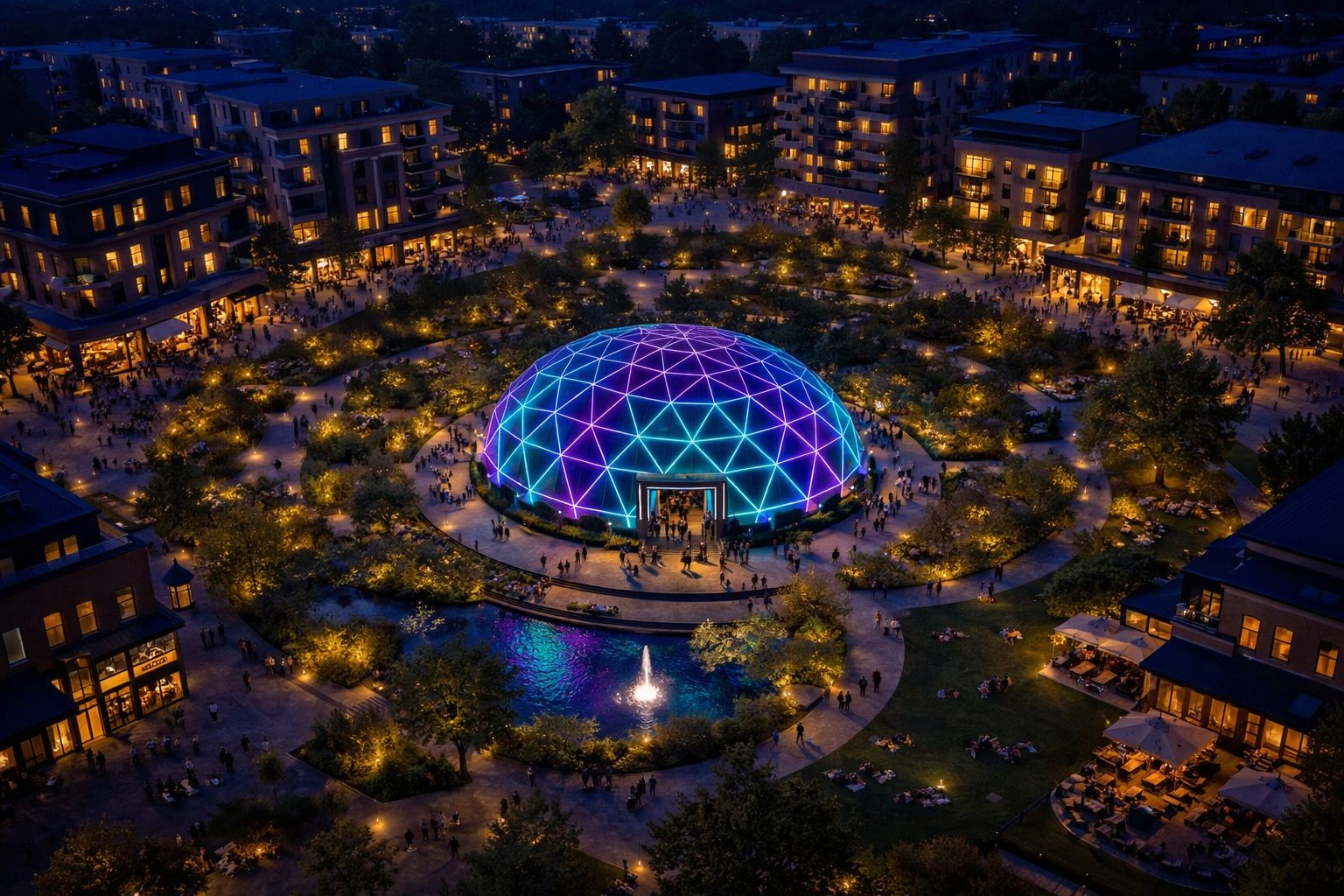
| Value Category | Construction | Annual / Ongoing |
|---|---|---|
| Construction jobs (direct + indirect + induced) | 164 | — |
| Construction wage impact | $9.36M | — |
| Total construction output (2.14x) | $18.19M | — |
| Permanent jobs (direct + indirect + induced) | — | 28 |
| Annual economic output (operations) | — | $3.16M |
| Member & visitor corridor spending | — | $1.685M |
| Annual tax revenue (stabilized) | — | $163,475 |
| Social Return on Investment | — | $6.16M |
| Recreation & green space value | — | $440,000 |
| Total 10-Year Economic Value to Charlotte | $68M+ | |
“Oasis Charlotte is not a wellness amenity. It is an economic development project with measurable returns in employment, tax revenue, corridor stabilization, community health, recreation access, and talent attraction.”
This analysis underpins the philanthropic and civic case for Oasis — and directly informs the terms on the Philanthropy & Investment page.